The design review
is the game.
Two renders of the same component. One is the spec, one is what got built — and something drifted. Find it, name it, get paid.
Made for a desktop or large display. On a phone, this is the tour — the game is waiting at your desk.
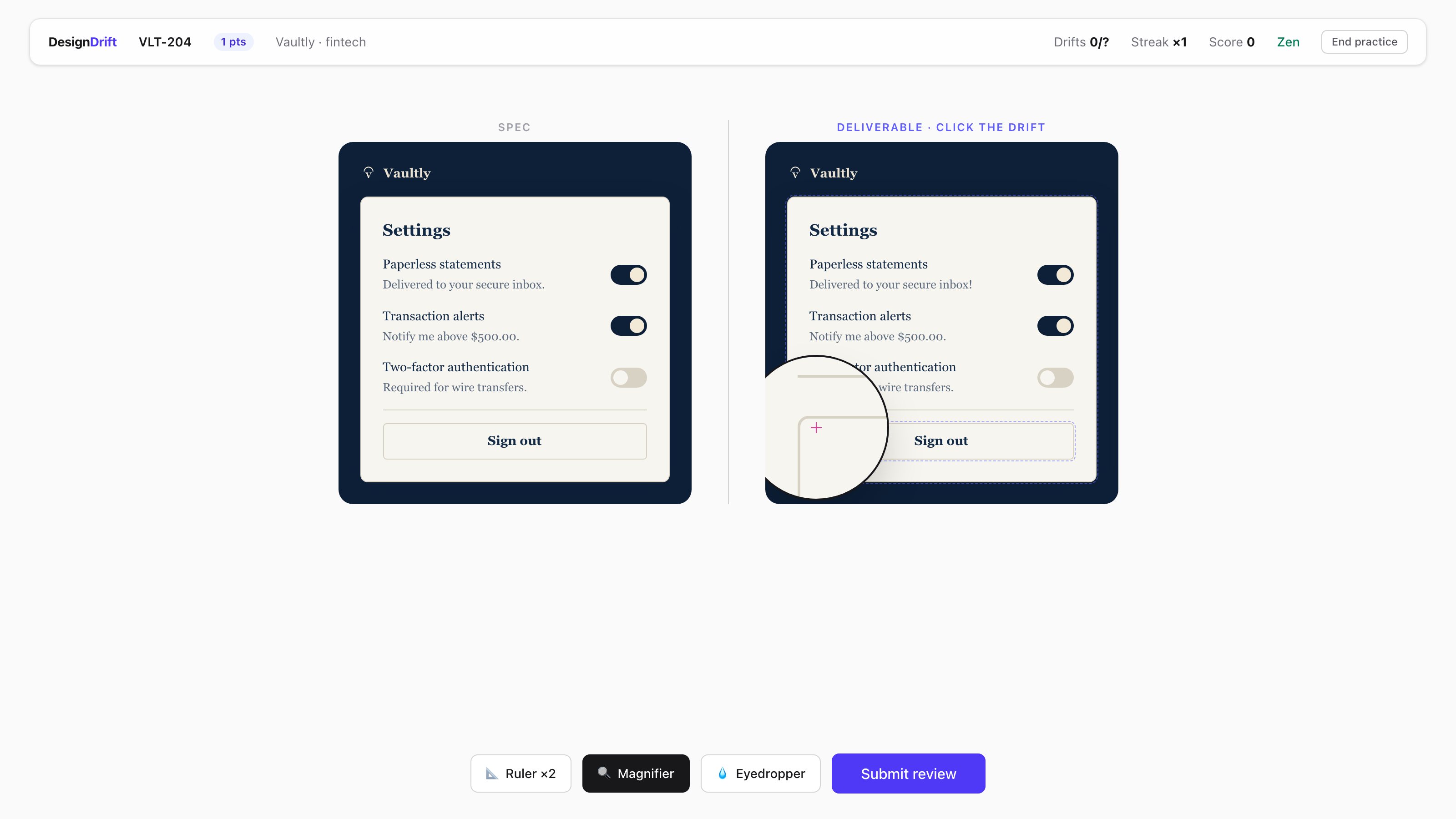
This one’s live. Three things drifted. Click them on the deliverable.
You’re a junior designer,
freelancing your way up.
Your career starts at the bottom of a gig board called Driftr — small tickets, sharp eyes, same-day pay. Close reviews fast and clean and the promotions come: better tools, pickier clients, bigger stories. Make Senior and a second seat opens: two clients share your day, and each morning you choose which boards to open. Reach the top of the ladder and you stop grinding the queue. You pick your work.
- Junior Designerthe ruler
- Designerthe inspector
- Senior Designera second seat
- Staff Designerdrift detector
- Senior Staffeyedropper
- Principalmagnifier
- Design Auteura third seat — you pick the work
Standard clients are taking your calls now — and you’re trusted with the audit work. Token audits are yours to take.
New tool: Inspector — audit the code behind a pixel-perfect renderA cozy career sim
with roguelite bones.
Rolled workdays, permanent progression, one more ticket. Every screen is rendered live from its client’s design tokens, so any property of any element can be the drift — twenty-one brands, every screen, every rule. Every screen below is the game.
A fresh backlog every day.
Five to eight tickets, dealt from a seed and sized to the client’s trust. Same seed, same day — share it and race a friend.
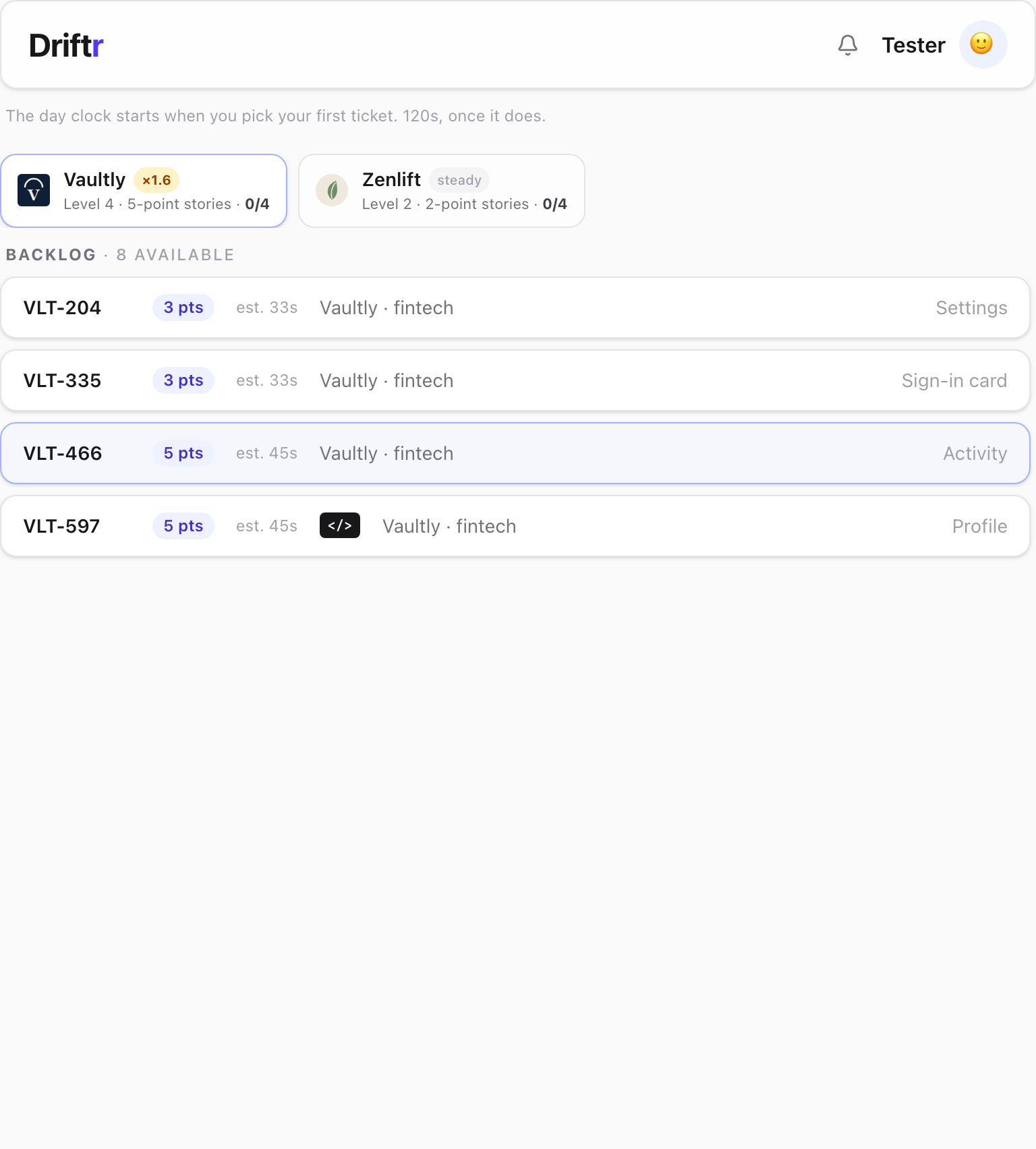
Every client is a contract that levels.
Sign a client; trust decides how big a story they send. Levels change at the end of the day, never mid-ticket. Make Senior and a second seat opens; Auteur, a third. Each morning you choose which boards to open — a board you open is a promise.
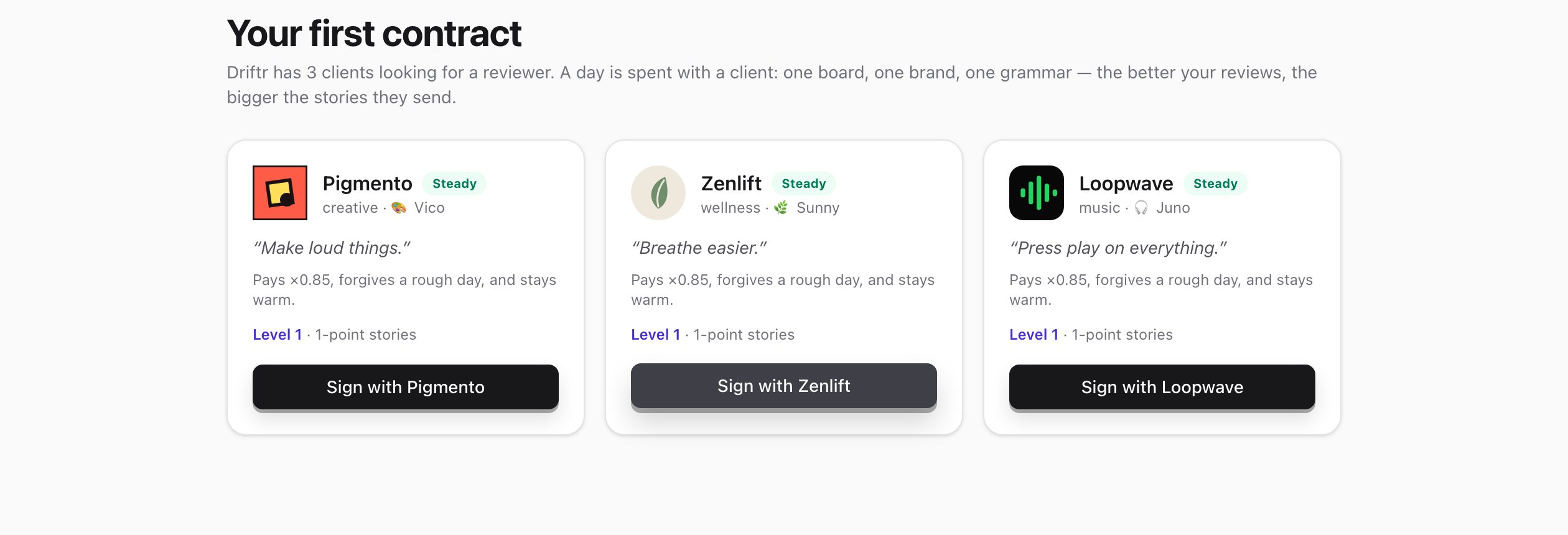
The render is perfect. The code isn’t.
Both panels are pixel-identical. The drift is in the code — a hardcoded value where a token belongs. Open the DEV panel and flag the line that lies.
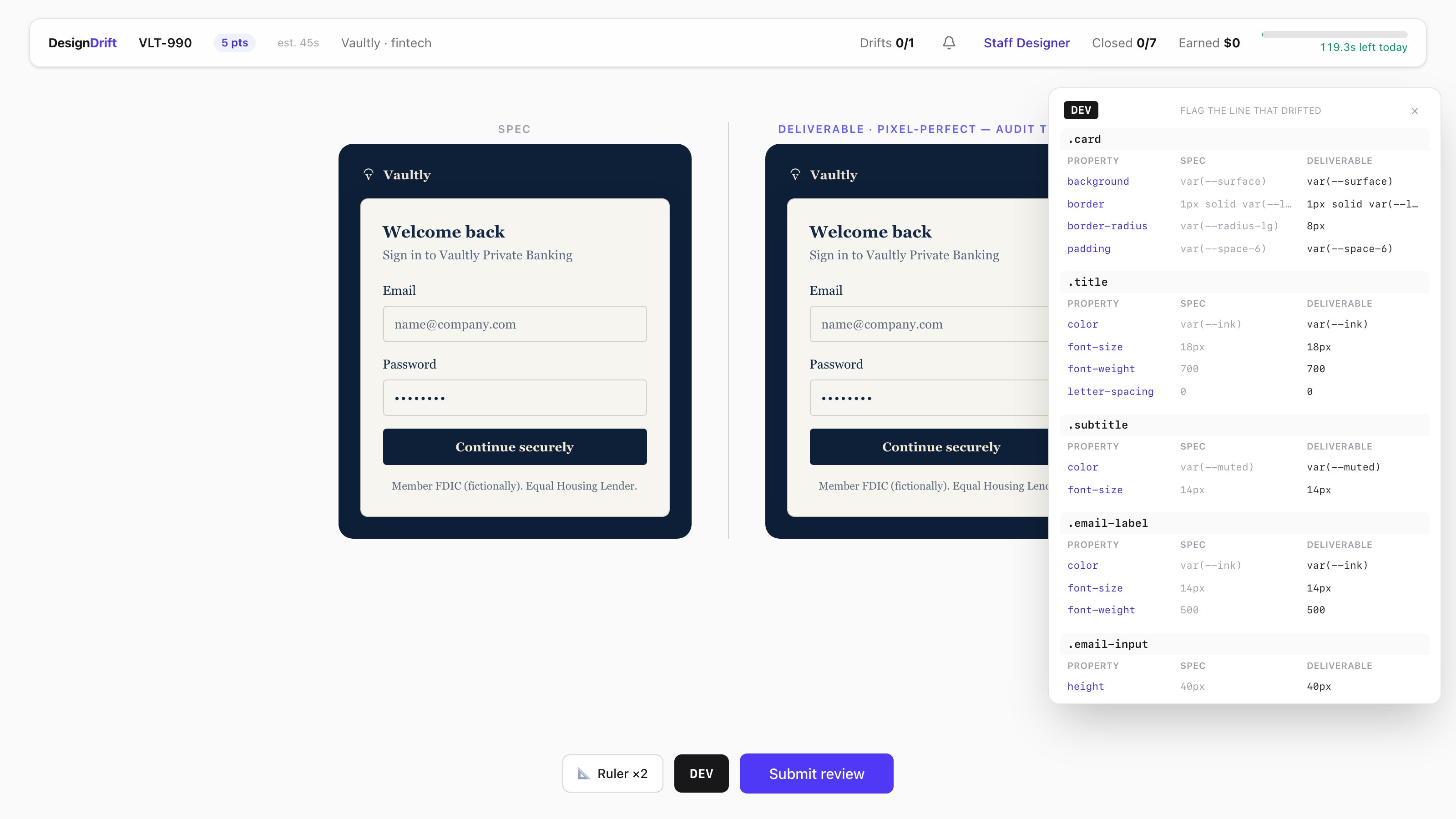
Nothing is really a 13.
Some days a 13-point monster lands, hiding six drifts. Reviewing it is the trap. Send it back and take the sane tickets it splits into.
Five in a row owns the screen.
Flawless reviews in a row multiply the pay, and every find plays a little higher. Hit five, ten, twenty and the takeover is yours.

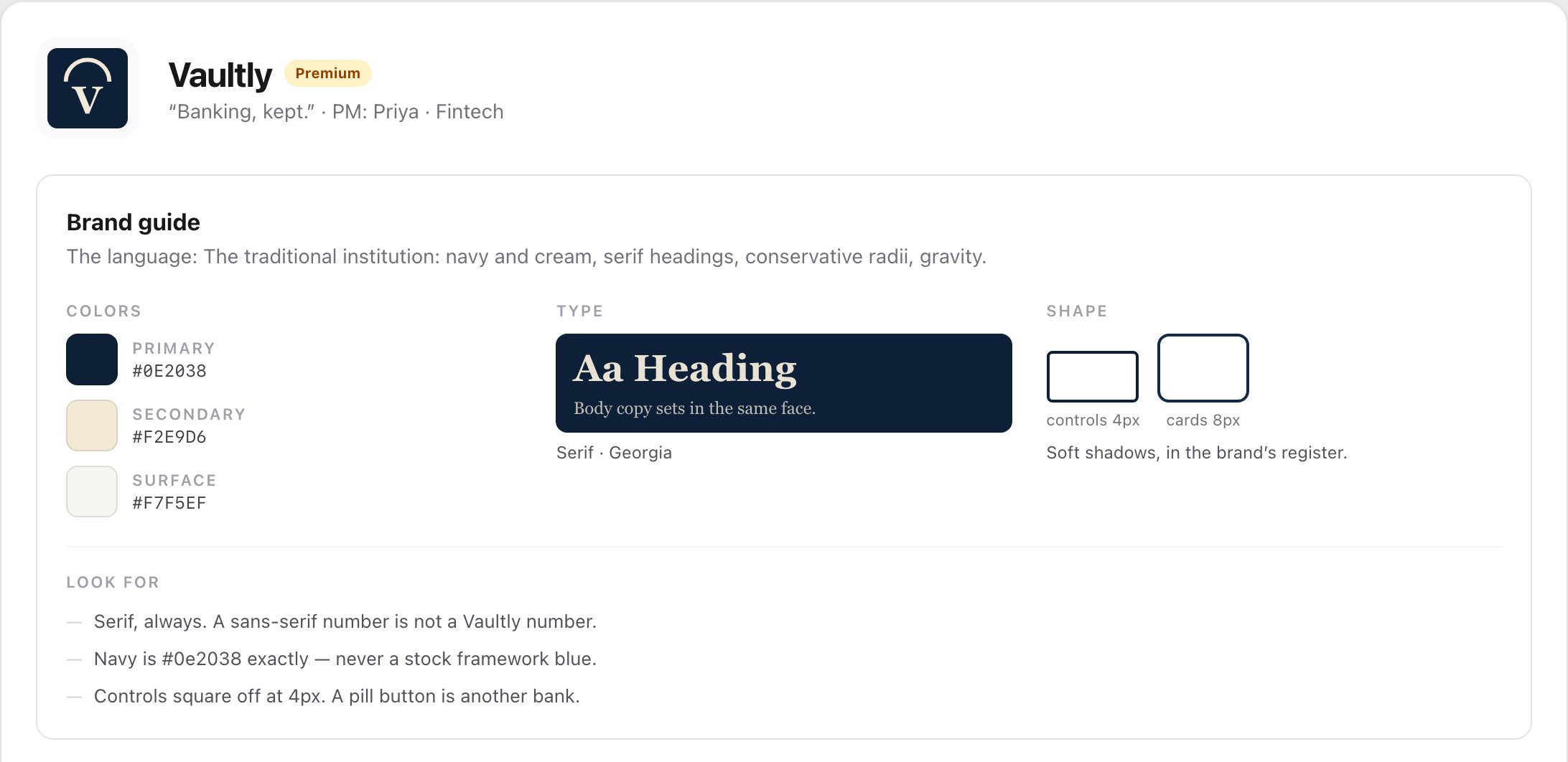
Every client’s guidelines, written for study.
Sign a client and their brand book arrives: the rules their product is built on, accurate to how it drifts. Study it and you catch faster.
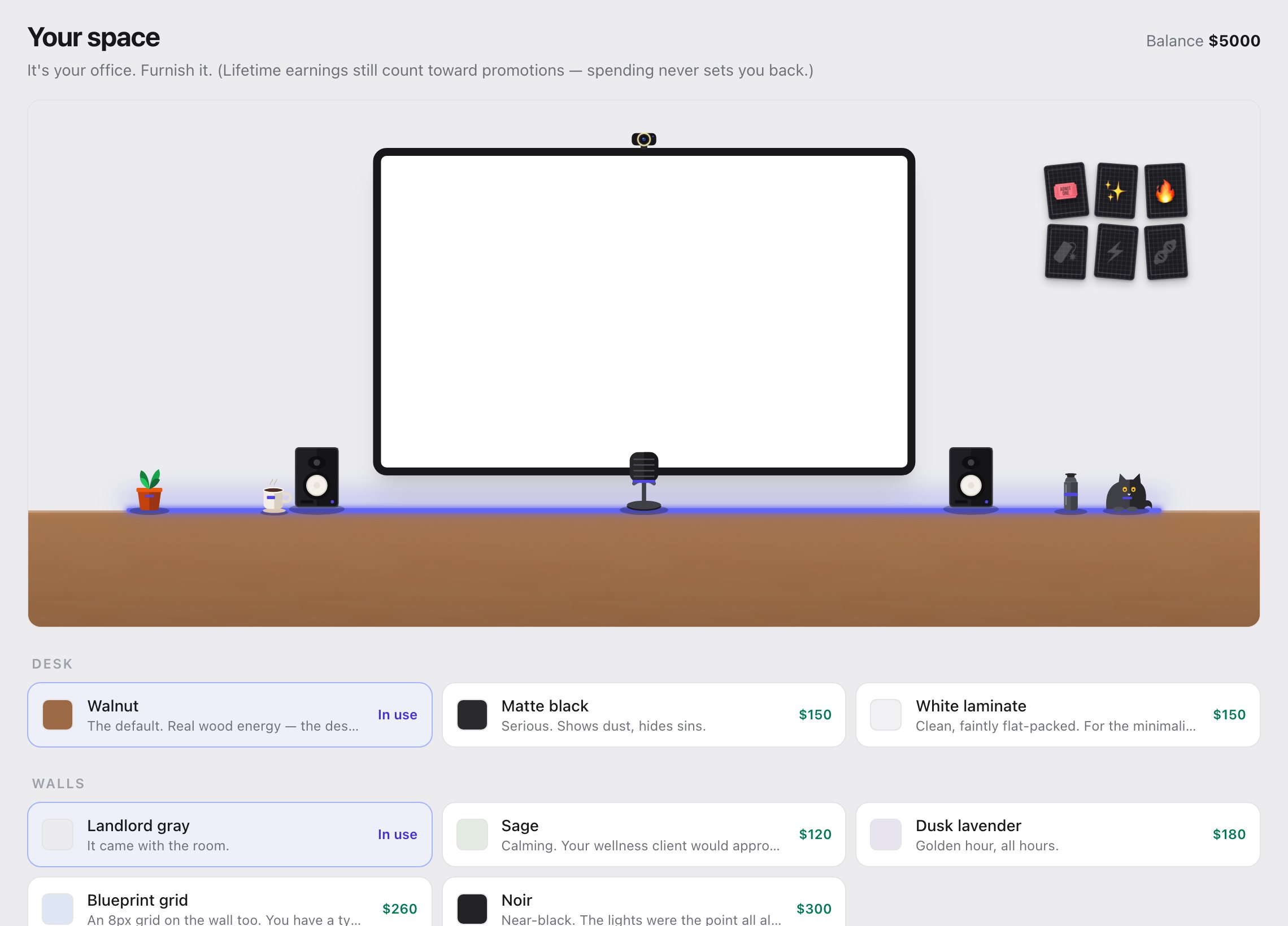
Furnish the desk you work at.
Career money furnishes the room: the LED strip, the perimeter glow, a plant, a coffee, the studio cat. Achievements hang on the wall as posters. Nothing here changes your accuracy.
A workday lasts
120 seconds.
Each client you sign deals a board: a finite backlog, sized by how much they trust you. With two clients, two boards share the same clock and the triage is yours. Clear a board and you finish early with a bonus. Sit with a hard ticket and the clock keeps running.
- Take a ticketFive to eight reviews, sized to how much the client trusts you. Every seed deals the same day — share it and race a friend.
- Spot the driftClick the element, name the property. A wrong radius, a drifted gap, an ellipsis that became three periods. Token audits, where the render is pixel-perfect and the code isn’t.
- Get paid for craftSpeed pays only when the work is right. Ship with misses and the client bounces it back: you sit with the rework while the day burns.
Level 4 · 5-point stories · 2/7 Zenlift steady
Level 2 · 2-point stories · 0/6
The job, with stakes.
Sign clients, earn their trust, and manage more than one backlog against the same clock. Promotions bring tools and bigger stories. The PMs remember.
The eye, with no clock.
No money, no timer. Pick one client and learn their grammar, or take every client at once, in an endless queue that gets harder every page.
Tools arrive
with promotions.
The ruler comes with day one; the inspector with Designer, the detector with Staff. Every tool introduces itself the first time it matters. All the tools, in order →
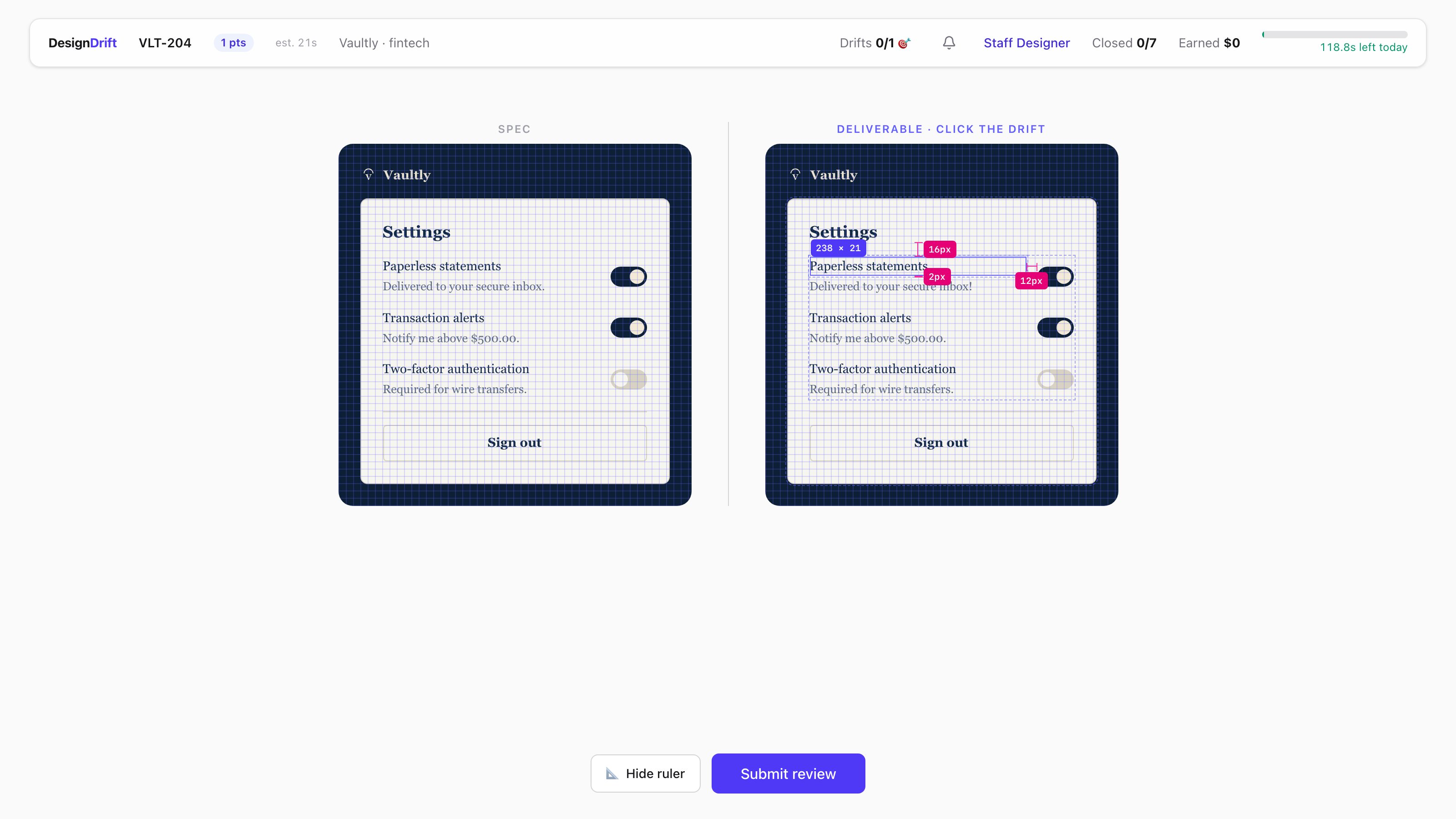
Ruler
An 8px grid, and the exact distance between things.
Inspector
The render is perfect. The code isn’t.


Drift detector
How much is wrong, before you look.
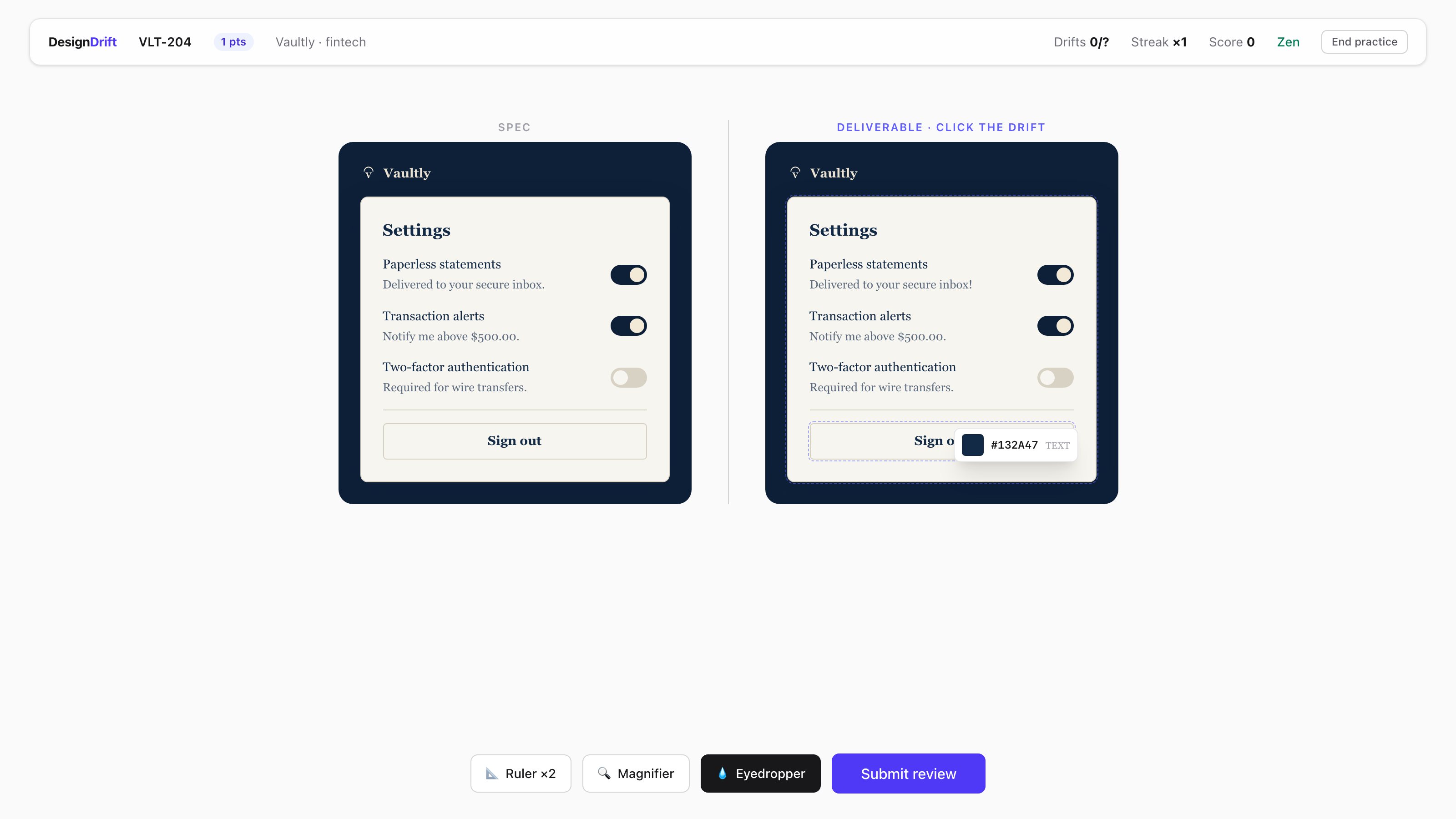
Eyedropper
Read the exact color under the pointer.
Magnifier
A 3× lens over any region.
Your clients
write back.
PMs message you about your work — warm, terse, or disappointed, a ticket or two after you shipped it. Trust is the contract: it decides how big a story they send tomorrow. Losing a client is losing an income stream. Craft is the long game.
ZEN-191 = pixel PERFECT ✨ the founder literally clapped
VLT-204 closed clean. Thanks.
uh, QRC-518 had more drift than diff. we bounced it back.
Sunny: You — you’ve earned it. From tomorrow you’ll find 3-point stories on our backlog. Level 3.
A premium client you didn’t touch today. They noticed.
Another seat at your desk — you can take on one more client tomorrow.
It’s not a facsimile of the job. The components are real, the CSS is real, the drift is real — it’s actually what’s happening.
Which is why it turned into a game
Every client has
a grammar.
Fintech to forums, each brand with its own design language — and its own ways to drift. A bank that must never round a corner; a music app where one wrong green belongs to a competitor; a photo editor where a hyphen is not a minus. Every one is fictional. Every one is real.
 VaultlyFintech
 ZenliftWellness
 CarebrightHealthcare
 QuericoDeveloper tools
 PigmentoCreative
 DesklyProductivity
 LoopwaveMusic
 VidoraVideo
 PingroomSocial & chat
 SwiftlyMobility
 VektorDesign tools
 RevelaImage editing
 KinemaMotion
 AgoraForums
 QuotientSales & CRM
 DuetDating
 SojournTravel
 ArdentCommerce
 PatienceGames
 HalfpastUtilities
 LarderNutrition
Your backlog is waiting.
Product, UI/UX, brand, icon — and the engineers who ship it. If you’ve ever caught a one-pixel drift in review, you arrive an expert.
Made for a desktop or large display. On a phone, this is the tour — the game is waiting at your desk.